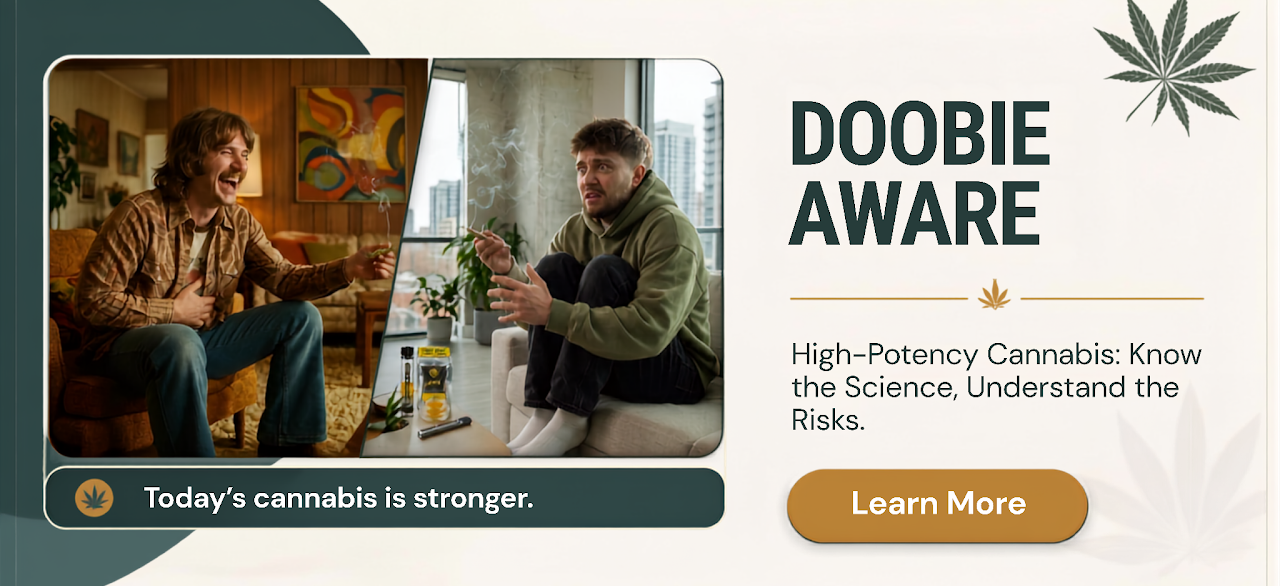
Doobie Aware
With today's THC concentrations reaching unprecedented levels, modern products carry real psychiatric and physiological risks. Understand what the science actually says.
What is the "Conversion Cliff"?
Cannabis-induced psychosis isn't always temporary. Studies show an 18.5% to 26% probability of transitioning to a formal schizophrenia diagnosis within 36 months—a 242-fold increase over the general population baseline. For young males aged 14 to 24, that conversion rate climbs to over 40%.
How does THC affect the developing brain?
Because the prefrontal cortex and hippocampus mature through age 25, high-potency THC acts as a neurochemical stressor.
In population-scale studies, individuals born in the 2000s exposed to modern potency levels were twice as likely to develop a psychotic disorder by age 20 compared to previous generations.
Why do edible policies matter?
Formal regulation directly dictates public safety. Following the commercialization of candy-like edibles, pediatric hospitalizations rose 6.3-fold. Regions that banned gummies and chocolates saw a 3.0-fold rise compared to a 7.5-fold spike in unrestricted markets.
-1.png?width=7437&height=7437&name=RR%20(1)-1.png)